

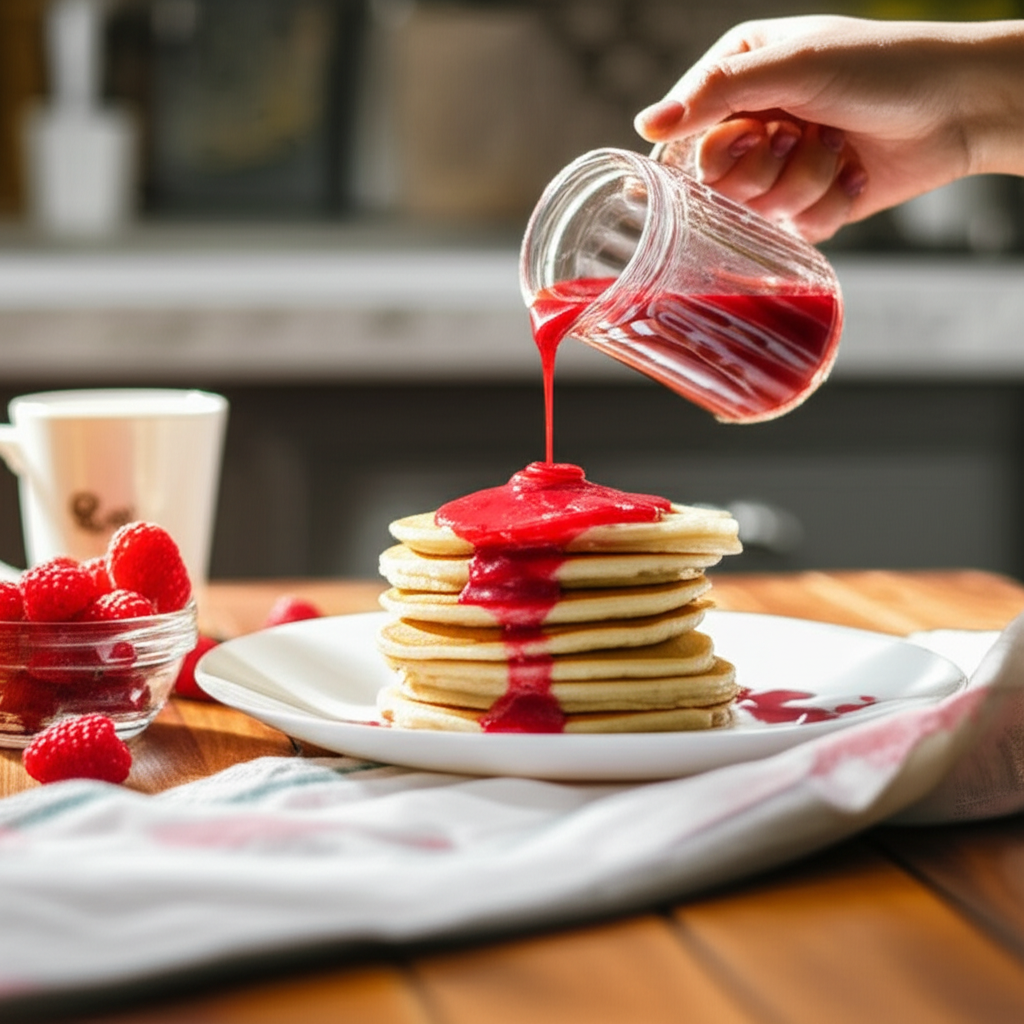
Make delicious, vibrant raspberry syrup for pancakes effortlessly with this simple, foolproof recipe. Perfect for beginners, it elevates breakfast with fresh fruit flavor in minutes!
Hello, pancake pals! A K Raihan here. Ever dream of drizzling your fluffy pancakes with a homemade raspberry syrup that bursts with fresh, sweet-tart flavor? It sounds fancy, right? But what if I told you it’s surprisingly simple, even if you’re new to the kitchen? Many folks think making fruit syrups is complicated, requiring special equipment or tricky techniques. That’s just not true! We’re going to ditch the store-bought stuff and create a vibrant, delicious raspberry syrup that will make your breakfast sing. Get ready for a super easy guide that turns simple ingredients into pure pancake magic!
Unlock the Sweetness: How to Make Raspberry Syrup That’s Pure Genius & Effortless
As your go-to guide for all things pancakes, I’m thrilled to share one of my favorite breakfast secrets: homemade raspberry syrup! Forget those artificial-tasting syrups. Making your own is not only incredibly easy, but it also tastes infinitely better. It’s the perfect way to add a burst of fresh, fruity goodness to your pancakes, waffles, or even yogurt. We’ll focus on simplicity, flavor, and making this a truly effortless experience for every home cook. Let’s dive into how you can create this delicious topping with minimal fuss and maximum flavor!
Why Homemade Raspberry Syrup is a Breakfast Game-Changer
Store-bought syrups are convenient, yes, but they often contain high-fructose corn syrup, artificial colors, and flavors that just don’t compare to the real deal. Making raspberry syrup from scratch is a revelation! You control the ingredients, the sweetness, and the intensity of that gorgeous raspberry flavor. It’s a fantastic way to use fresh or frozen raspberries, making it a versatile treat year-round. Plus, the vibrant color alone is enough to brighten any breakfast table. It’s a simple step that elevates your entire meal, proving that deliciousness doesn’t need to be complicated.
Ingredients: The Simple Stars of the Show
The beauty of this recipe lies in its simplicity. You only need a few basic ingredients to create a truly spectacular raspberry syrup. This means less time shopping and more time enjoying your delicious creation!
- Fresh or Frozen Raspberries: 2 cups (about 10-12 ounces). Both work wonderfully! Frozen raspberries are often more budget-friendly and readily available.
- Granulated Sugar: ½ cup to ¾ cup, depending on how sweet you like your syrup and the tartness of your raspberries. Start with ½ cup and add more if needed.
- Water: ¼ cup. This helps create the perfect syrup consistency.
- Lemon Juice: 1 teaspoon (optional, but recommended). A little lemon juice brightens the raspberry flavor and helps balance the sweetness.
Equipment: Your Effortless Kitchen Allies
You don’t need fancy gadgets for this. Just a few common kitchen tools will do the trick:
- Medium Saucepan: For cooking the raspberries.
- Potato Masher or Fork: To help break down the raspberries.
- Fine-Mesh Sieve or Strainer: Crucial for a smooth, seedless syrup.
- Bowl: To catch the strained syrup.
- Spoon or Spatula: For stirring and pressing the fruit.
- Airtight Container or Jar: For storing your finished syrup.
Step-by-Step Guide: Your Path to Raspberry Perfection
Ready to make some magic? Follow these simple steps, and you’ll have delicious raspberry syrup in no time. It’s so easy, you’ll wonder why you ever bought it from a store!
Step 1: Combine and Cook the Raspberries
In your medium saucepan, combine the raspberries (fresh or frozen), sugar (start with ½ cup), and water. If you’re using lemon juice, add it now too. Give everything a good stir to combine. Place the saucepan over medium heat.
Step 2: Simmer and Mash
Bring the mixture to a gentle simmer. As it heats up, the raspberries will start to break down. Use your potato masher or a fork to gently mash the berries. This helps release all their wonderful juices and flavor. Continue to simmer for about 5-10 minutes, stirring occasionally, until the raspberries have softened and released their color and juice. The sugar should be fully dissolved by now.
Pro Tip: Don’t overcook it! We want to capture that fresh raspberry taste. A gentle simmer is all that’s needed.
Step 3: Strain for Smoothness
This is the key step for a silky-smooth syrup without pesky seeds. Place your fine-mesh sieve over a clean bowl. Carefully pour the cooked raspberry mixture into the sieve. Use the back of your spoon or spatula to gently press the solids against the mesh, extracting as much liquid as possible. You’ll be left with a beautiful, vibrant liquid in the bowl and the seeds and pulp in the sieve.
What to do with the leftover pulp? Don’t throw it away! You can add it to smoothies, yogurt, or even bake it into muffins for extra raspberry goodness.
Step 4: Return to Pot and Thicken (Optional)
Pour the strained raspberry liquid back into the clean saucepan. Place it over low heat. If you want a thicker syrup, you can simmer it gently for another 5-10 minutes, stirring occasionally. Be careful not to let it boil vigorously, as it can become too thick or burn. The syrup will thicken further as it cools. If you prefer a thinner, more sauce-like consistency, you can skip this step or simmer for just a minute or two.
For a Thicker Syrup: You can dissolve ½ teaspoon of cornstarch in 1 tablespoon of cold water (this is called a slurry) and whisk it into the simmering syrup. Cook for another minute until slightly thickened.
Step 5: Cool and Store
Once you’ve reached your desired consistency, remove the saucepan from the heat. Let the syrup cool completely in the bowl. As it cools, it will thicken to a perfect drizzling consistency. Once cooled, carefully pour your homemade raspberry syrup into an airtight container or jar. Store it in the refrigerator.
Tips for Raspberry Syrup Success
Here are a few extra pointers to ensure your raspberry syrup is absolutely perfect every time:
- Adjust Sweetness: Taste the syrup after straining and before any optional thickening. Add more sugar, a tablespoon at a time, if you prefer it sweeter. Remember, it will taste less sweet when cold.
- Berry Quality Matters: While frozen berries are great, if you have access to really ripe, flavorful fresh raspberries, they will yield an even more intense flavor.
- Seedless vs. Chunky: If you don’t mind a few seeds, you can skip the straining step for a more rustic syrup. However, for that classic smooth texture, straining is essential.
- Storage Life: Homemade raspberry syrup typically lasts about 2-3 weeks in the refrigerator. Always check for any signs of spoilage before using.
- Flavor Boosts: Feel free to experiment! A tiny pinch of cardamom or a splash of vanilla extract can add interesting notes to your syrup.
Creative Ways to Use Your Raspberry Syrup
Beyond the obvious pancake and waffle topping, this vibrant syrup is incredibly versatile!
Here are some ideas:
- Yogurt Parfait: Drizzle over Greek yogurt and granola for a delightful breakfast or snack.
- Ice Cream Topping: It’s a fantastic homemade alternative to commercial ice cream sauces.
- Cocktails & Mocktails: Use it to sweeten and flavor drinks like a Raspberry Sparkler or a Raspberry Mojito.
- Cheesecake Drizzle: Elevate your cheesecake with a beautiful raspberry glaze.
- Fruit Salad: Toss fresh fruit with a little syrup for an extra burst of flavor.
- Baked Goods: Swirl into muffin batter or use as a filling for thumbprint cookies.
Raspberry Syrup vs. Raspberry Coulis: What’s the Difference?
It’s a common question in the kitchen: what’s the difference between syrup and coulis? While both are delicious fruit preparations, they have distinct characteristics:
| Feature | Raspberry Syrup | Raspberry Coulis |
|---|---|---|
| Consistency | Thicker, more viscous, like traditional pancake syrup. | Thinner, more sauce-like, often pourable. |
| Sweetness | Generally sweeter, with sugar being a primary component for preservation and flavor. | Can be less sweet, often allowing the natural fruit flavor to dominate. Sugar is adjusted to taste. |
| Purpose | Primarily used as a topping for pancakes, waffles, French toast. Also used in drinks. | Used as a sauce for desserts like cheesecake, panna cotta, or as a base for sauces. |
| Seeds | Typically strained to be seedless for a smooth mouthfeel. | Can be strained or unstrained, depending on preference. Some prefer the texture of seeds. |
| Added Liquid | Often includes water to achieve syrup consistency. | May include a small amount of water or fruit juice, but often relies on the fruit’s natural moisture. |
Our recipe leans towards a classic syrup consistency, but as you saw in Step 4, you have the flexibility to make it thinner like a coulis if you prefer!
Troubleshooting Common Raspberry Syrup Issues
Even the simplest recipes can sometimes present little hiccups. Here’s how to tackle common problems:
- Syrup is too thin: This usually happens if you didn’t simmer it long enough in Step 4. Gently return it to low heat and simmer for a few more minutes. If it’s still too thin after simmering, consider the cornstarch slurry method mentioned in Step 4.
- Syrup is too thick: If you accidentally simmered it too long and it became jam-like, you can thin it out by stirring in a tablespoon or two of warm water or lemon juice until you reach your desired consistency.
- Not sweet enough: This is an easy fix! Gently reheat the syrup (don’t boil) and stir in more sugar, a tablespoon at a time, until it tastes right.
- Too much sugar/too sweet: Add a splash more lemon juice or a tablespoon of water to balance the sweetness.
- Seed remnants: If you find seeds after straining, it means your sieve might have holes that are too large, or you didn’t press hard enough. For future batches, ensure you’re using a very fine-mesh sieve and applying good pressure.
FAQs about Raspberry Syrup
Q1: Can I use different types of raspberries?
A1: Yes! While this recipe uses standard raspberries, you can also use black raspberries or even a mix of berries if you like. The flavor profile will be slightly different but still delicious.
Q2: How long does homemade raspberry syrup last?
A2: Stored properly in an airtight container in the refrigerator, homemade raspberry syrup generally lasts for about 2 to 3 weeks. Always check for any signs of spoilage before using.
Q3: Can I make raspberry syrup without seeds?
A3: Absolutely! The key is to use a fine-mesh sieve and press the cooked berries firmly with a spoon or spatula to extract all the liquid, leaving the seeds behind. This is detailed in Step 3 of the guide.
Q4: Can I make this syrup sugar-free?
A4: You can try using a sugar substitute like stevia or erythritol. Start with a small amount and adjust to taste, as the sweetness levels vary. Keep in mind that sugar also contributes to the syrup’s texture and shelf life, so the result might be slightly different.
Q5: My syrup isn’t very thick. What did I do wrong?
A5: The syrup will thicken more as it cools. If it’s still too thin after cooling completely, you can gently reheat it and simmer it for a bit longer (Step 4). Alternatively, the cornstarch slurry method can help achieve a thicker consistency.
Q6: Can I freeze raspberry syrup?
A6: Yes, you can freeze raspberry syrup! Pour it into freezer-safe containers or ice cube trays. It should last for several months in the freezer. Thaw it in the refrigerator when ready to use.
Q7: Where can I find good quality raspberries?
A7: You can find raspberries at most grocery stores, farmer’s markets, or even grow your own if you have the space! Frozen raspberries are a great, often more affordable, option and work just as well for syrup. For more information on growing berries, you might find resources from agricultural extensions helpful, such as those provided by the USDA Agricultural Research Service, which offers extensive information on fruit cultivation.
Conclusion: Your Effortless Breakfast Awaits!
There you have it! Making your own raspberry syrup is not only incredibly rewarding but also remarkably simple. From the fresh, vibrant color to the burst of sweet-tart flavor, this homemade syrup is a game-changer for any breakfast. You’ve learned how to transform humble raspberries into a gourmet topping with just a few basic ingredients and straightforward steps. Whether you’re a seasoned cook or just starting out, this recipe is designed to be foolproof and delightful. So go ahead, whip up a batch, and prepare to impress yourself (and anyone lucky enough to share your pancakes!). Happy drizzling, and enjoy those delicious, homemade mornings!
